Julian Smith's Story
Life after open-heart surgery
by Julian Smith
It’s a given that every person who suffers from Marfan syndrome (MFS) has their own story to tell.
Some of the most distressing cases are harrowing and desperate, because of the complicated management regimes that make everyday life so exhausting and onerous. These stories can ultimately be tragic and very difficult to read, let alone to imagine the implications for the individual sufferers themselves - and of course their families.
Other stories might be less dramatic but nevertheless highlight the tough day-to-day challenges which people have faced and overcome. They may offer more hope if, for example someone’s life was turned around through successful surgery and their focussed determination to get back to ‘normal’ as quickly as possible.
My name is Julian Smith and I have Marfan syndrome. My story is definitely one of hope. But it’s also one of transition over many years - from total ignorance of my genetic disorder, to a late and gradual understanding of the range of health issues that have affected me. One of those health issues could recently have been responsible for my ‘unexpected’ death at 68. Very luckily it wasn’t - and I’m here to tell the tale - and maybe help offer a few words of advice and comfort for some readers.
The take home message I would like to try and convey to MFS sufferers and their families, is that it is possible to lead a ‘regular’ life with the disorder with the appropriate medical advice. In some cases, this could be over many years of managing the symptoms routinely, and/or before and after an elective intervention - or even after a major cardio emergency.
As a post-surgery in-patient you will possibly be at the most fragile and vulnerable point in your entire life (as I was) and even when you’re discharged from hospital there is simply too much to deal with both physically and mentally. And it’s very very hard to cope on your own.
But with or without cardio-surgery, dealing with Marfan syndrome can be so much more bearable and reassuring with a strong support team around you to help with things like:
Following my surgery I wasn't in a good place and I needed more support than the NHS rehabilitation services could offer. I spent some time researching what was available and chose to work with the team at CP&R who helped me enhance every area of my life, from becoming more confident with exercise following surgery to developing the right nutritional habits to support my needs. They got me through the long hard days and even harder nights of my early rehabilitation. And I will be forever grateful to them.
I knew their professional care was second-to-none because, unbelievably, one of my sons had just completed a successful rehab. course with them following his PEARS (Personalised External Aortic Root Support) surgery. He was delighted with the care he received and just as importantly, the positive clinical outcomes.
I should note here that my recovery was possibly helped by a lifetime of regular sport and exercise and (what I thought was) a balanced diet (hoho - more of that later). In addition an invaluably supportive wife and some extraordinary good luck most certainly made the journey easier to navigate.
I hope this story will resonate with some readers and be a useful guide offering potential solutions where there may appear to be few ...or none.
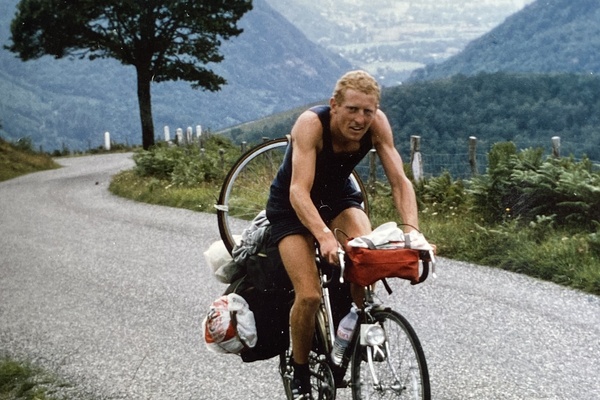
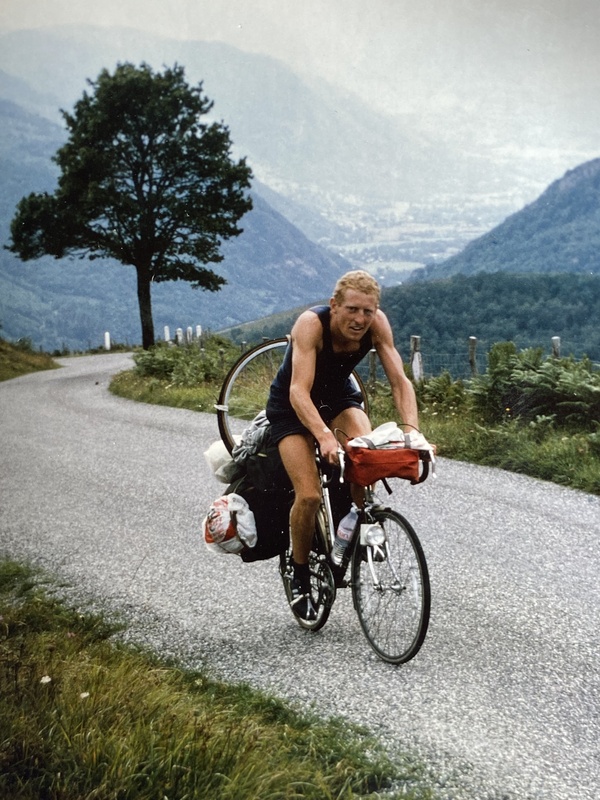
[Picture: Ignorance is bliss. Cycling in the Pyrenees ...via Scandinavia, Germany and a big chunk of France for 6 months in 1981.]
FROM EMERGENCY OPERATION TO REHABILITATION - A MARFAN STORY
“Well sir, the results are in from your last virtual assessment - and I have to say, I really don’t think you’d recognise this Julian - next to the one from a year ago!”, beamed Izzy, my personal Cardio Coach.
And I had to agree with her, as we ‘high-fived’ over a Zoom call.
It was true. I didn’t recognise myself. It was February 2026, twelve months on from a life- threatening medical emergency. I had just completed my fifth clinical assessment, and now, there was a real sense that I had moved on. And the numbers proved it: Cardio vascular data; muscle mass; strength and mobility, psychological metrics - all still on an upward trend.
Rewinding the journey in my head, I couldn’t reconcile the fact that on this, the first warm spring day of 2025, the guy enjoying coffee and cake at home, with his wife in the garden, was the same one who’d had a slo-mo collapse in the field just 50m away, then crawled and staggered to the front door - hyperventilating for Britain, and wondering if this was ‘really it’.
The hospital experience had left me with some serious mental and physical ‘baggage’. I knew I was a wreck. Nothing quite added up. And I didn’t feel connected to the planet. Disassociation - I don’t know?
On that day in February ‘25 I knew something bad was happening for sure - because my head was swimming and I could hardly walk. At the time I hadn’t been over-exerting myself but I had a strange sensation in my stomach and the side of my neck. ‘Something’ was moving inside. But what? With no scary symptoms, why would I or anyone think their aorta was dissecting?
Fact Number one: the main symptom of aortic dissection is extreme pain - I had zero pain.
Fact Number two: About 40% of aortic dissection victims don’t make it to the ambulance -
I did.
I was conscious, and my wife Rosemary was with me - which was just as well. The ambulance team hadn’t heard of Marfan Syndrome but they got me to hospital in time, an aortic dissection was quickly diagnosed and I underwent lifesaving surgery. On 6 March 2026, I looked back on a life changing year and the rehab which ended up making it life-enhancing too.
But this wasn’t ‘The End’ - only ‘The End of the Beginning’ ...to “Live longer, better”.
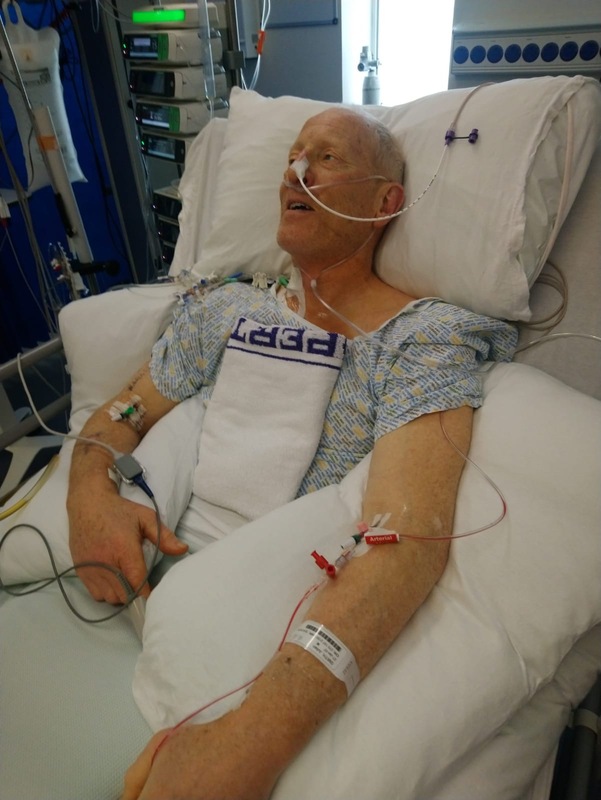
[Picture: Day three in Edinburgh Royal Infirmary:Definitely looking better than I felt😂 - just about to head off to the High Dependency Unit for a rendez-vouz with a long needle - and swopping 2.5 litres of fluid for some lung capacity.]
• NUTRITION
Nutrition - I thought I understood what was good for me but that notion came crashing down when I had to do a daily food diary...For me, one of the hardest parts of my recovery was keeping a ‘Food diary’. Why?!
So, the received wisdom is that in order for your body to not just ‘get better’ but to actually become stronger after major surgery, you need to eat very well. By that the nutritionists mean a varied, ‘balanced diet’ with an adequate daily intake of protein. Typically this means 1.2g of protein per kg of body weight.
So, that’s 90g of protein per day for me then! What does that look like? It could be 300g of chicken or beef; 400g of salmon; 13 large eggs; 1kg of lentils or 380g of cheese. That’s a serious mountain of food that I never attempted to burrow through! My proein intake consisted of a modest amount of meat and fish with pulses, dairy, beans, tofu and lots of nuts. Alternatively IF you can stomach protein bars - five of them or a couple of pints of protein shake every single day will cover it - an equally tough gig for me!
Working it out for yourself is a real challenge - and we gave it a go - but you can ‘cheat’ by referring to say, Jamie Oliver’s ‘Eat Yourself Healthy’ ‘Food to change your life’ This is a big call - but I think it’s justified. The book is a belter on so-o many levels.
For non-foodies or slow cookers (like me!) there’s even a ‘Two week kickstarter menu’ which floods you with ideas and quick solutions for an absorbing, healthy and super tasty fortnight. Rinse and repeat - or try EVERY thing in the book! I don’t think you’ll be disappointed.
BUT, it came as a monster shock to me that for sixty-eight of my sixty-nine years, I have not been eating as well as I thought and most definitely NOT enough protein or fluids.
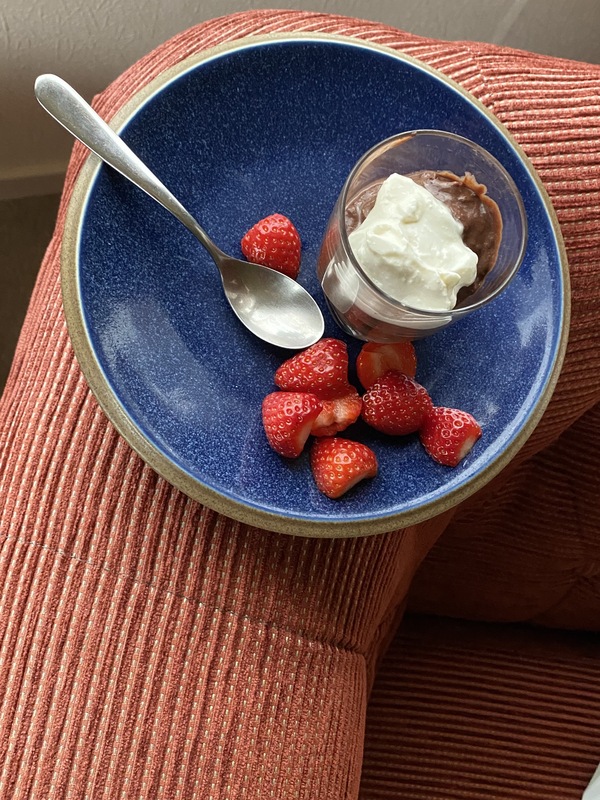
HOWEVER, thanks to my amazing wife, with her speed and skills in the kitchen, that all changed and during my rehab. ‘We’ regularly scored above average on the food diary. I might even have persuaded ‘TeamSmith’ to try some recipes?! (See pix at the end)
[picture: Jamie Oliver's Chocolate dessert (minus the chocolate) Words aren't enough to do these justice! They take 'yummy' to a whole new level - and it's all good for you!]
SO MANY STARS HAD TO LINE UP...
I was one of the very very lucky ones - and, thanks to all the incredible NHS staff (and a Scottish Air Ambulance) I made it from home near John o’ Groats to the operating theatre 300 miles away in Edinburgh - and into the care of the surgeon - the amazing Mr Pessotto. It’s impossible to overstate what extraordinary work he and his theatre team carried out - despite one or two short-lived issues, suffice it to say, the job he did was exemplary.
However, post op. My brain couldn’t compute the enormity of the event - everything was confusing and overwhelming and yet I felt detached - a sensation that lasted for some weeks: General anaesthetic; the operation; a stroke; pneumonia; bells-whistles-alarms-tubes and wires everywhere; hallucinations that were mind-blowing and zero sleep for days on end - probably didn’t help. The effort of just getting through the day was unprecedented. I have known (what I thought was) exhaustion through sport and work but when it took 20 minutes just to tie a shoe lace - I knew this was on a different level. With a colossal amount of help, I got through the ordeal of ‘hospitalisation’ - and back home.
The first twelve weeks of rehabilitation I believe are so important to get right. And even though I have done PT most of my adult life, I am absolutely confident I would have got everything spectacularly wrong! I had no idea what I should have been doing in my condition - and to have over-exerted myself could have been quite dangerous. With direct access to the Head cardio nurse (Angela) and having my Cardio coach (Izzy), there from day one, checking my blood pressures and heart rate in real time, whilst working out - was so reassuring. Also, being guided through a whole range of new exercises specifically chosen to put the least amount of stress on the ‘broken bits’ has been transformative. From where I am now in July 2026, I really cannot imagine going through those first twelve weeks alone!
Here are some of the improvements I saw over the year
- A 67% improvement in cardiovascular fitness and aerobic capacity.
- Meaningful gains in physical strength and functional independence.Marfan sufferers typically struggle to increase muscle mass. This most definitely includes me! But the combination of a controlled protein intake (see below) and regular exercise resulted in a ‘milestone achievement’ - the first significant weight gain in my entire adult life!
- My average weight since I was about twenty had been 72kg. Today, in June 2026, I weigh 79kg due to an increase in muscle mass. I am genuinely blown away by this one single statistic! Despite a lifetime of sport and exercise I am probably stronger now in certain muscle groups such as quads, hamstrings and pecs. than pre-surgery! Difficult to believe.
- Improved Exercise Confidence Score - I trust my body more and can engage confidently in exercise and activity that I know is safe for me.
BUT HOW DID I GET TO THIS POINT IN THE FIRST PLACE?
The family medical history (and future) was, is and will be entwined with Marfan syndrome. The timeline of medical intervention was a bit blurry in the beginning - a bit like the vision in my left eye in 1970 - and ‘eye-ronically’ exactly like it is now!
It’s a long and complex story: I am 69 years old, which I believe is ancient for a Marfan patient but I am hoping to get even older! The stuff that I’ve been through isn’t nearly as bad as what many more unfortunate people have to endure - but for the record:
1975 - 1979
1983 - 2025
2026
BUT - despite all of the above interventions, I now know, as a Marfan syndrome sufferer, I have got off with it lightly! I say this in all seriousness and with mixed feelings.
Eye problems have been an issue for my entire adult life - and I think I understand most of the pathology pretty well, but my survival to this age is due in no small part to ignorance and a massive dollop of luck.
Despite being monitored by a geneticist since 1995, it was not confirmed that our family had Marfan til 2015. Also I was never led to believe I was in any immediate danger and the minimal risks to the aorta were managed with beta blockers and anti-coagulants from 2016. Incredibly, a CT scan just one month before my dissection did not flag up any warnings!? The take-home message was: ”Nothing to see here - just continue with regular 12 month review. See you in 2026”
It’s well documented that MFS patients present with widely differing symptoms and prognoses.
If I had been aware of the life-threatening dangers and complex genetic issues related to Marfan Syndrome - I am sure I wouldn’t have: played rugby or badminton; raced sailing dinghies; cycled round Europe for six months from Norway’s fjords to the Pyrenees; or enjoyed over fifty years of judo. Who would do that?! Most of these activities are not advised - indeed they are strongly ill-advised by Marfan Trust and European Journal of Preventative Cardiology.
But the discovery of the causative gene Fibrillin-1 did not happen til 1991. I suspect things would have been so much more complicated had I had that knowledge earlier in my life - not least the implications of having a family.
I was ignorant of the precipitously dangerous issues relating to MFS - and in relation to many life choices and for whatever reasons - I personally ‘got away with it’. And for that I will be eternally grateful. So many others have not been as fortunate - including at least three family members who were unaware of it - and lost their lives.
It’s very difficult to rewind and imagine what I would have done forty years ago... but what I have done for sure is - I have passed on the defective gene to both my sons and three grandchildren. And for this I can only plead ignorance and forgiveness. Their relationships with Marfan syndrome have already begun and despite mirroring some of my own experiences, advancing medical procedures have helped short-circuit the major health issues dramatically.
I hope the technology combined with the good fortune I have experienced will help all my family live as long and fulfilled a life as I have.
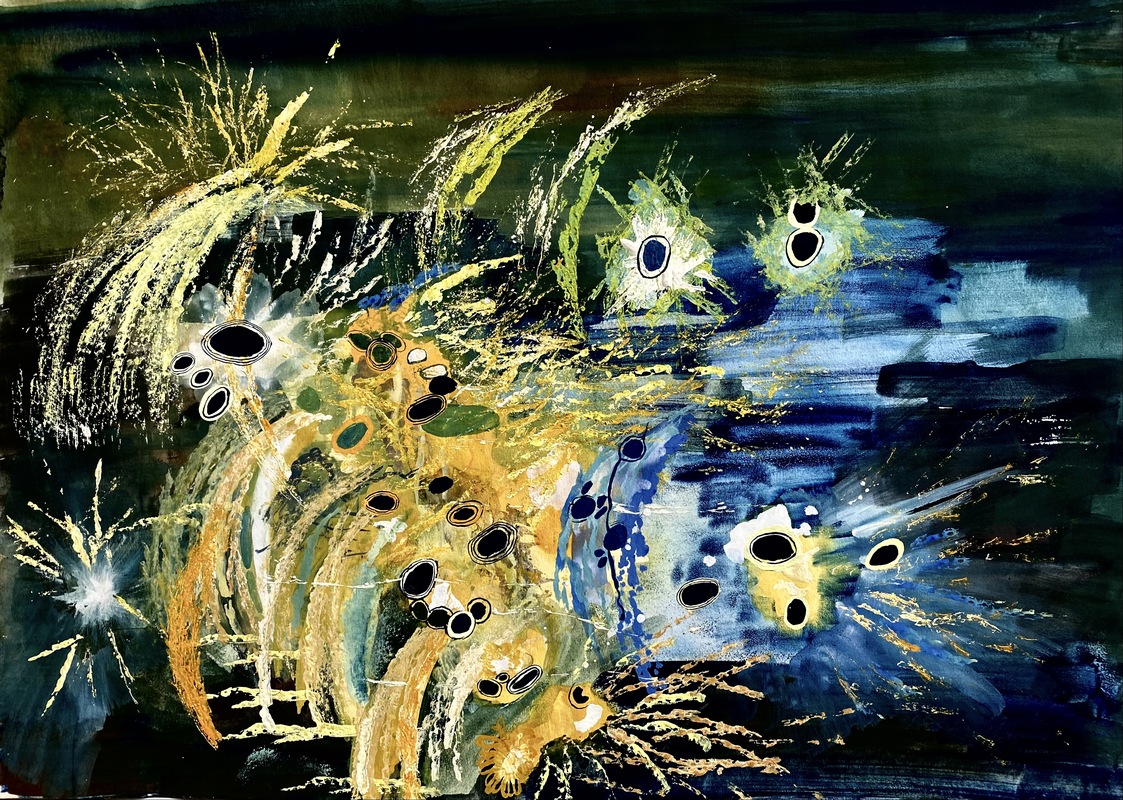
[Picture: A painting by me called 'Manchester nightlife' (1975) from a high rise hall of residence through my left eye with a dislocated lens (and a brush). ]
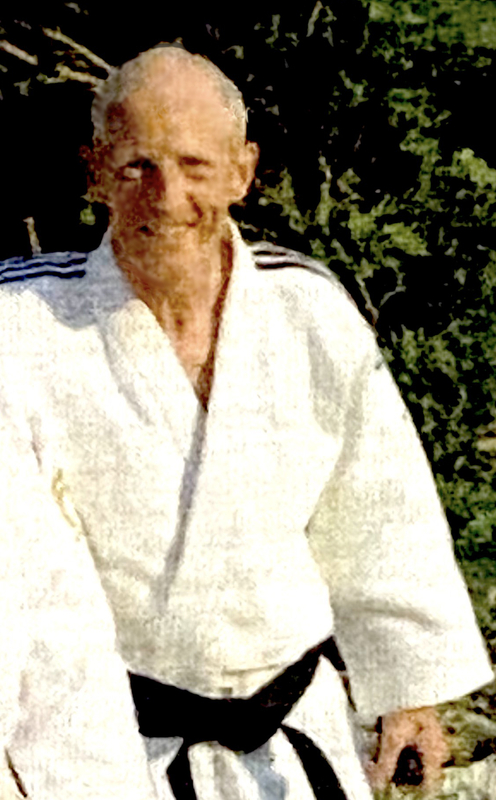
[Picture: Before bowing out of an unremarkable life on the tatame (judo mat) I decided I should really make an effort and go for my black belt. Glad I did now - our judo club folded during 'lockdown' - after sixty years! A very sad day.]
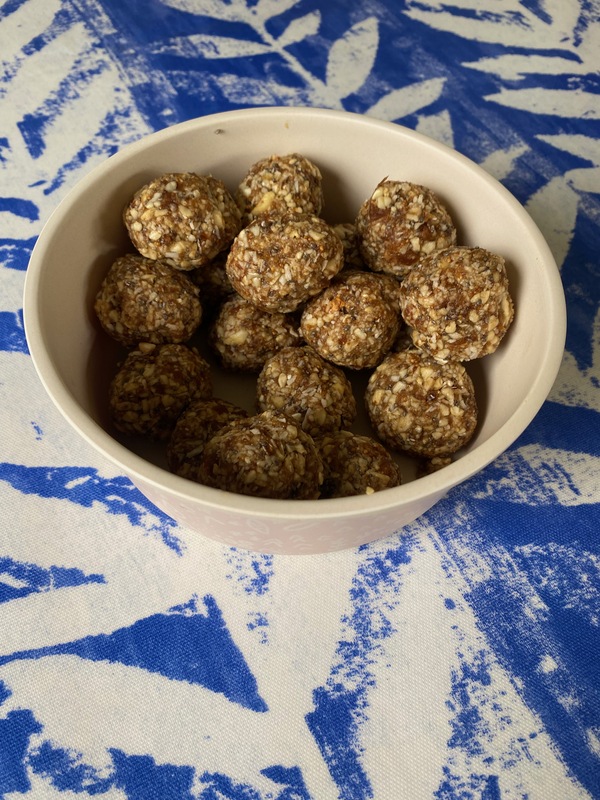
[picture caption: Packed with flavour - home made protein balls - delicious with yogourt and fruit or just on their own. 3-4 g of protein each depending on size.]
STUFF I DO - THAT HAS MADE A DIFFERENCE FOR ME
Some of this might help other Marfan sufferers at any stage in their lives.
Do regular exercise - in order to “Live longer better”
Find ways to make exercise enjoyable and a regular part of your day - and eventually - your life.
Try to do simple easy movements whenever appropriate and build them into your day. Even if you’ve never ‘done exercise’ or find it hard to make time for it, the more frequently you make small efforts, the more you’ll begin to appreciate how much it’s benefitting you.
And please believe me - it will!
Balance and core strength are so important to just feeling good about yourself and especially key to living well into old age. There are lots of ways you can improve both aspects without going to a gym or setting ‘special’ times aside for more concentrated efforts.
For example these are some of the little things I have added into my daily routine:
Marfan Trust disclaimer - you need to have a discussion with your GP or care provider before starting any new activities. Everyone with Marfan or Loeys Dietz syndrome is affected differently and what works for one may not work for another.
Since being ‘released into the wild’ from ‘TeamSmith’ my routine, including exercises from CP&R is as follows. I target low to medium effort and include a mix through the week:
Pre-breakfast stretching - Yoga / Tai chi / and/or Jikyo Jutsu (all gentle but challenging)
Resistance training - with bands in Zone 2+3 (Zones range from 1-5 but seek expert advice)
Cardiovascular exercise (cycling) mostly in Zone 2+3 (I’m not aiming for the Tour de France!)
TOTAL c.45mins -1hr per day / c.10 hours per week
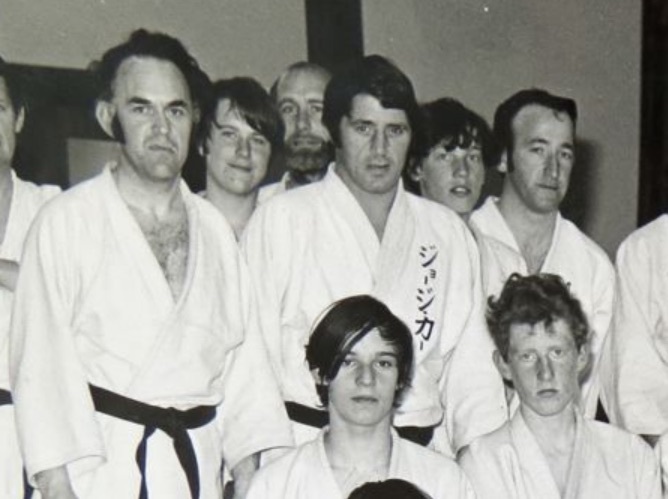
[Picture: At the beginning of my judo ‘career’😂 aged 12 (bottom right) white belt. Little did I realise I had over 50 years on the mat to go … or that with Marfan syndrome - I really shouldn’t be doing it!]
Marfan Trust Disclaimer: we do not endorse any particular rehabilitation programme and recommend you take advice from your surgical team.

A new life for you and your loved ones?
If you’re reading this article as someone with a connective tissue disorder such as Marfan syndrome or as a carer for someone with the disorder - then this bit is for you.
I really don’t think it matters whether there has been a medical crisis or not - for those involved, especially if there are serious health complications, or one person is a dependent, then there is usually an ‘understanding’ or an ‘arrangement’ that a certain amount of care and assistance is required. Probably for a long time.
For Marfan sufferers - becoming fitter and healthier will not only benefit you – the independence and ‘freedom’ you gain, can be doubly beneficial. Taking more control of your own life is a fundamental way of relieving your carer(s) of some of the responsibility and effort they have devoted to you.
Time changes everything - and time will hopefully help improve your health over the years. It might also help to give you the opportunity to try new, more nutritious foods to boost your health even more? Maybe (if you’re not used to cooking) you could learn how to prepare new meals - giving you and your family / carer new experiences AND reducing your dependence on them.
Similarly - as indicated earlier, beginning or increasing your new exercise regime will bring more control into your life - and once established as ‘just part of your routine”, will help make reliance on your carer less of a responsibility.
Sleep solutions
Major cardio surgery takes a huge amount out of a person - so good sleep is absolutely essential for recovery. The trouble is it’s hard to get right. Being exhausted doesn’t always mean sleep is guaranteed - certainly not regular restful sleep - enough to repair the body efficiently.
So, for someone who’s always struggled to get a consistent sleep quota, (hello-o-o) a spell in hospital and then being discharged as a bit of a wreck is like a double whammy and, unfortunately the cycle seems to be self-perpetuating for a prolonged period.
There are innumerable tips and techniques out there for helping you get the desired eight hours (IF ONLY!) and some methods work for some people - but not others. And it isn’t necessarily straightforward. Even the usual suspects that get a bad press: viz. coffee; alcohol; staring at a screen til bedtime, are not consistently or necessarily impediments to a good night’s sleep.
‘Sleepio’ is an app. (featuring David Tennant) which offers some good advice. The best one I discovered was: If you can’t sleep DO NOT LIE THERE STARING AT THE CEILING FOR MORE THAN 20-30 MINS! GET UP and go to your ‘somewhere else’ where you will go to ‘prepare for sleeping again’. Make a drink and maybe have a small snack; get a book; make yourself comfy - and read until you feel tired. THEN go back to bed.
I found it did work when I was in a pretty bad way and not long out of hospital. Hope it works for you.
Have a good night.
Julian
Small wins - big days!
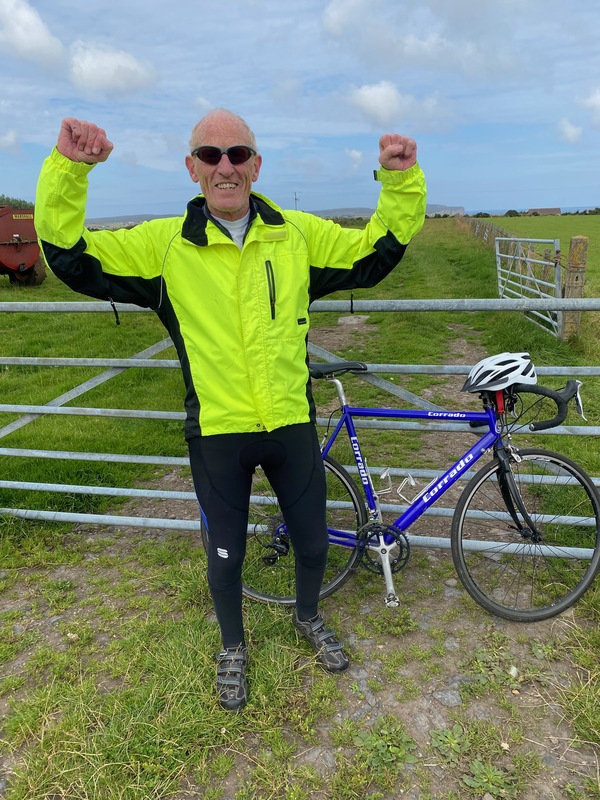
‘TeamSmith’ smashes the schedule. We’d hoped to be ready for cycling in the wild by Christmas 2025 - but we cracked it by July. Very happy indeed.