Opening a window onto the nationwide experiences of people living with Marfan and Loeys-Dietz syndromes, reveals rare insight into care and what must change. Your voices help us understand today and shape tomorrow. Our recent survey uncovers the symptoms felt most acutely, the disparities running through healthcare, and the daily realities of life with these conditions. What happens next?
To inform our helpline, identify disparities in healthcare provision, and better understand the nationwide care experience of people with Marfan syndrome (MFS) and Loeys-Dietz syndrome (LDS), we undertook a survey at the end of 2025. Between September and November, the online survey was shared widely to capture detailed insights into daily life and the lived experiences of those affected.
We were not disappointed! A huge thank you to the 395 people who completed the survey either for themselves, or on behalf of someone they care for. Every answer we received has provided valuable insights and a sharp focus on areas that we, as a charity, can target. Thank you!
Good
- 89% of you told us you experience good cardiology care, with imaging AT LEAST every 2 years (although this should ideally be annually)
- 45% of you received a confirmed diagnosis within one year of first going to the doctor with symptoms
- 86% of you have received a genetic diagnosis (although only 66% have been offered testing for other family members)
Areas for Improvement
- 1 in four of you say that before diagnosis your health concerns were not taken seriously by healthcare professionals
- 56% of you don’t have a named health care professional (HCP)
- 53% of you don’t feel that the different HCPs involved in your care work well together
- 67% report having to sometimes or often arrange or your own care
- 76% of you felt that you didn’t receive sufficient information from the NHS on your condition and ongoing treatment
"I felt frustrated that care for Marfan syndrome focuses entirely on the heart. I have had to find my own support for other symptoms of the syndrome".
Invisible Symptoms that can shape daily life:
- 69% of you want more access to mental health support
- 72% reported that their daily life is somewhat or extremely affected by pain while that figure was 87% for fatigue and 58% for gut issues.
Action
- We value every response we received and will endeavour to take action that improves the situation for people living with LDS/MFS.
o In response to the high volume of those reporting gut problems, we arranged a webinar with a Dietician who is familiar with Connective tissue disorders on 25th Feb at 7pm and the recording is available here.
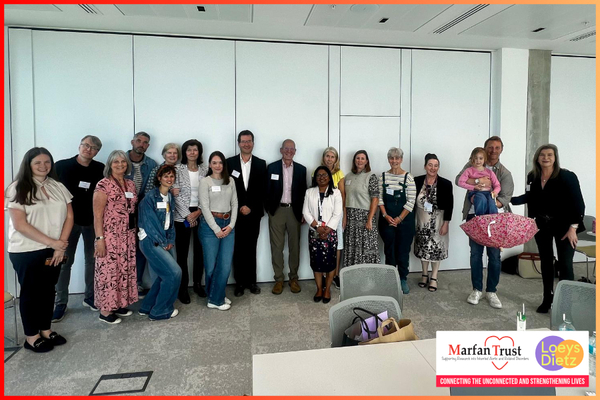
o We have planned a year of roadshows across the country to increase awareness amongst HCPs and Victoria opened this on Tuesday 10th Feb with a fabulous visit to the staff and patients at Birmingham Children’s Hospital
o We are exploring projects and resources to provide you with the mental health support you have asked for and are speaking to the wonderful organisation, Rare Minds
o We are in the midst of exploring a pain-management project and will have good news shortly.
o We are working with organisations like Genetic Alliance to maximise our voice and influence health policies affecting people living with rare conditions like MFS/LDS
o We are working to expand our network of in-person regional support groups throughout the UK, click here for details, email [email protected] if you would like to set up a local group with our support
We will continue to update you with news and initiatives that have come from this invaluable piece of work which we could not have done without you.
Thank you to everyone who participated. If you would like to get in touch, please email us [email protected] or call 03330115256