Hans Christian Andersen
Did the creator of fantastical fairy tales have Marfan syndrome?

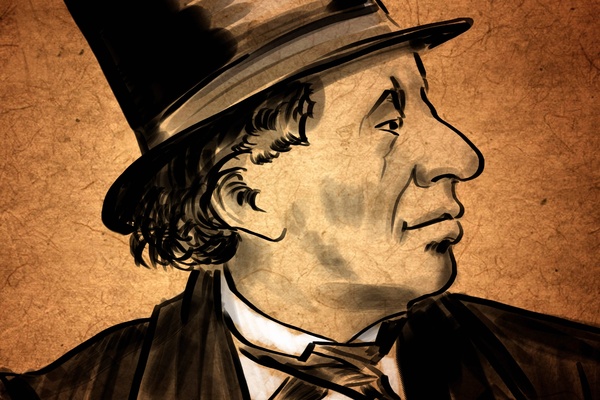
Whilst a 20-year-old student in Copenhagen, Hans Christian Andersen (1805 - 1875) was described as “a lanky figure in a worn-out grey coat whose sleeves did not reach his emaciated wrists”. He had been born into poverty, in a one-room cottage in Odense, Denmark. His father was a shoemaker and his mother a washerwoman, and both fed his avidly creative mind with tales from The Arabian Nights. Apparently, he is even said to have believed he might be a changeling, a supernatural creature switched with a human child as a baby.
Towering physically above his peers at school, Hans Christian Andersen felt ungainly and was socially awkward. He took refuge in his own imaginative worlds, regaling his classmates with made-up curious stories about outsiders destined for greatness. After his dreams of performing on stage were shattered, he turned to writing in earnest, soon reaping rewards.
It did not take long for his stories including The Little Match Girl, The Princess and the Pea, The Red Shoes, The Little Mermaid and The Emperor's New Clothes to take flight and propel him to the courts and palaces of Europe. He achieved great international acclaim as a young man and his tales have since become part of our cultural fabric and language. Yet his personal life was marked by unrequited love. Everyone who met him commented on his physical appearance, describing him as “long, thin, fleshless, boneless" and remarking on his "out-of-proportion arms and legs".
Perhaps a metaphor for Hans Christian Andersen’s own life, The Ugly Duckling, published in 1843, celebrates the importance of staying true to oneself, with beauty emerging from within. Unusual for its time, it was an entirely original story rather than a retelling of folklore. The tale’s message became Andersen’s abiding motto: “It matters nothing if one is born in a duck-yard,” he wrote, “if one has lain in a swan’s egg.”