You Can Make A Difference!
From patient to teacher - how you can educate the professional
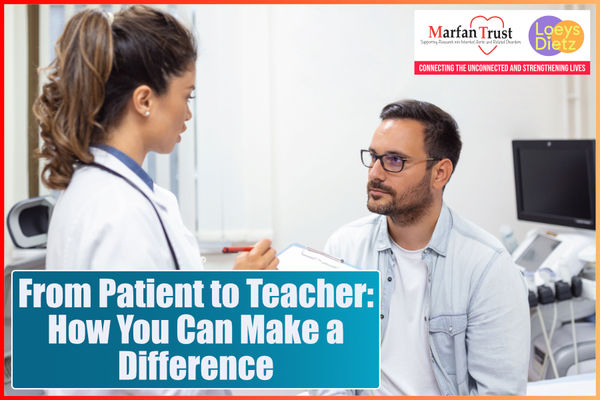
"Once a doctor meets a person with Marfan syndrome, the doctor never forgets. Otherwise, a doctor may not know about this unusual condition, and awareness is so important, as early diagnosis of Marfan syndrome can ensure correct management and save lives.". Dr Anne Child, Medical Director, Marfan Trust
Educate!
Rare conditions can be elusive and difficult to diagnose. They are often little understood amongst healthcare professionals outside professional clinics.
Of the three pillars guiding our charity’s work - “Support”, “Educate” and “Research” - we dedicate valuable time to the second, and an integral part of this is raising awareness amongst healthcare professionals. We engage with clinics across the country, present at conferences and share the latest research with the aim of heightening the profile of Marfan and Loeys-Dietz syndromes. We also share your stories across our website and social media, host webinars and stage symposiums.
However, to echo Dr Child, the best way for a clinician to become familiar with a condition is to meet someone who lives with it - to talk to them, examine them, and learn from their experiences, their symptoms and their challenges. You are the expert!
You can have a direct impact, and these are some of the ways you can get involved if you would like to.
Getting Involved:
Every doctor must pass exams throughout their training. These are not just written exams, they must learn to examine patients, ask the right questions, pick up the right signs and symptoms to make an accurate diagnosis.
The Royal College of Physicians (RCP) manage exams called PACES (Practical Assessment of Clinical Examination Skills). You can find more information about these exams and register your interest in participating here. These exams take place throughout the country.
The Royal College of Paediatrics and Child Health (RCPCH) have a similar system of exams in place for doctors working with children. However, their system for patient volunteers is slightly different and you cannot register your child as a possible volunteer. If you and your child would be happy for them to participate, you should discuss this with the consultant responsible for their care.
Medical Schools
Medical schools across the country look for volunteers who help with training medical students. This could involve being examined or simply having a consultation so that students can learn valuable communication skills and how to take a good medical history.
Contact your local medical school to find out if they have a list of volunteers you could join.
Ward Rounds and Placements
Medical students learn on placements within hospitals and GP surgeries. If there are medical students about you can do the following:
- Let them observe your consultation (your permission will always be sought)
- Let them examine you and ask questions
- If you are in hospital offer the opportunity for them to come back and talk in more detail if they are on a ward round
- Tell them about the Marfan Trust and the information available on our website if they want to learn more
Register your Interest in Research
Research is another of our three pillars and without patient volunteers it is impossible to continue making progress and improving lives.
The National Institute of Health and Care Research (NIHR) have a ‘Be Part of Research' campaign that allows you to find out about research going on across the United Kingdom.
You can register online and via your NHS App here you can add your demographic details and the type of research you are interested in, you could use keywords such as ‘Marfan syndrome’ Loeys-Dietz syndrome’ ‘Aortic Dissection’ ‘Fatigue’ ‘Chronic Pain’. There might not be relevant studies going on right now, but you will receive an alert if that changes.
Susan’s Story
Finally, read Susan’s story here about how she is committed to raising awareness of Marfan syndrome. Susan attends PACES Ahead and has some pleasing progress to report:
“The first set I attended, two years ago, were very disappointing with only one out of five student doctors even mentioning Marfan Syndrome. Today, two years on, I am delighted to be able to report that out of seven student doctors four were able to make the link to a connective tissue disorder with three of them specifically mentioning Marfan Syndrome”. This is fantastic news!
You CAN make a difference!