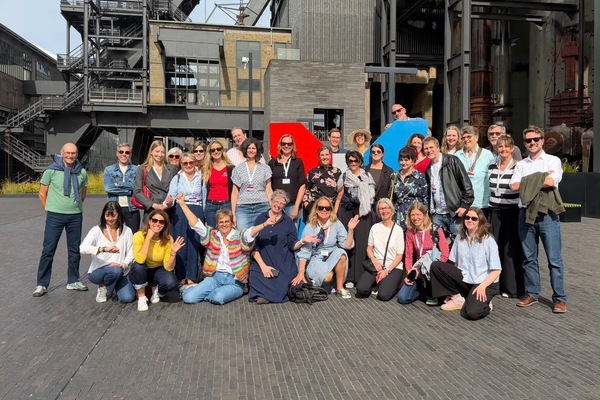
The Meeting of the Marfan European Network (M.E.N.)
Luxembourg 2026
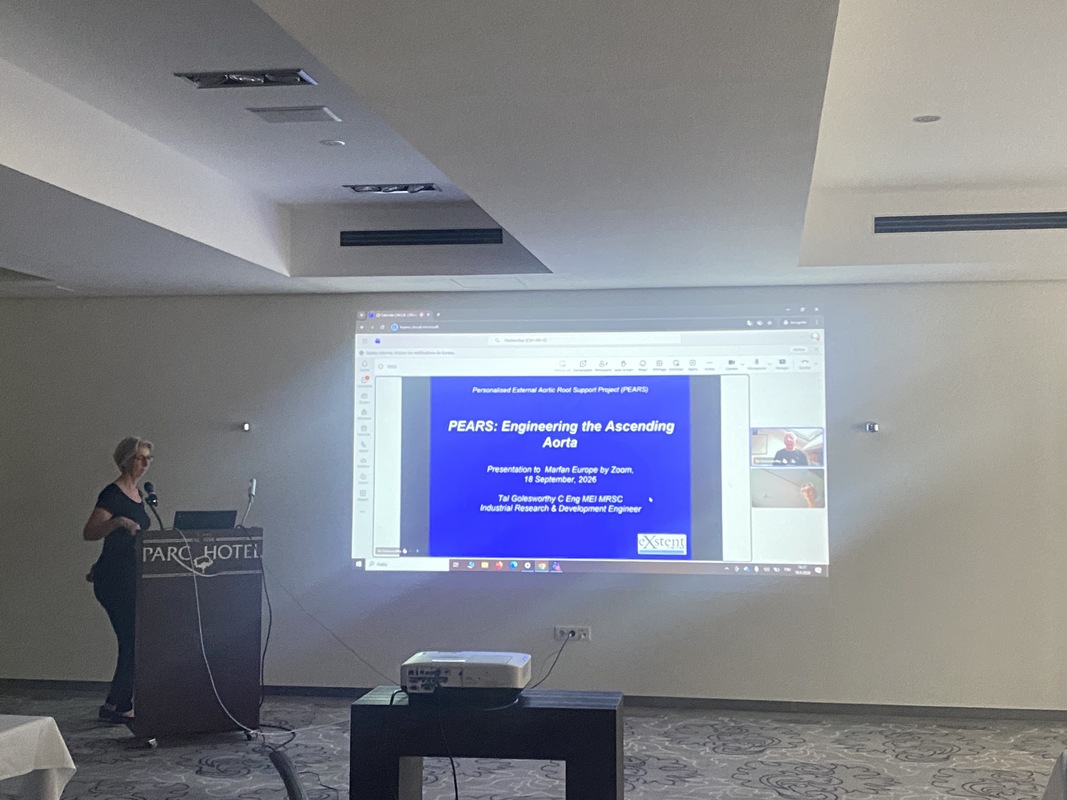
PEARS pioneer Tal Golesworthy opened the day with Engineering the Ascending Aorta, describing the genesis and evolution of his life-saving invention. The number of patients treated with his made-to-measure external support for the ascending aorta has now reached 1,953, across many different countries.
The PEARS procedure involves surgically implanting the bespoke support around the ascending aorta, where it becomes incorporated into the adventitia and new microscopic blood vessels grow directly through the pores of the mesh, maintaining the blood supply to the outer layers of the aortic wall. It is an elegant, unobtrusive alternative to traditional operations, sparing patients the need for anticoagulation and heart bypass. Children can only be treated once their aorta has reached adult size.
Asked about allergies, Tal said Root Replacement grafts as well as a PEARS graft were made of PET so there should be little difference between patient reactions.
He also emphasised that it is not all in the genes, citing identical twins who, despite sharing the same genes and life experiences, have developed very different aortas.
Holistic Health
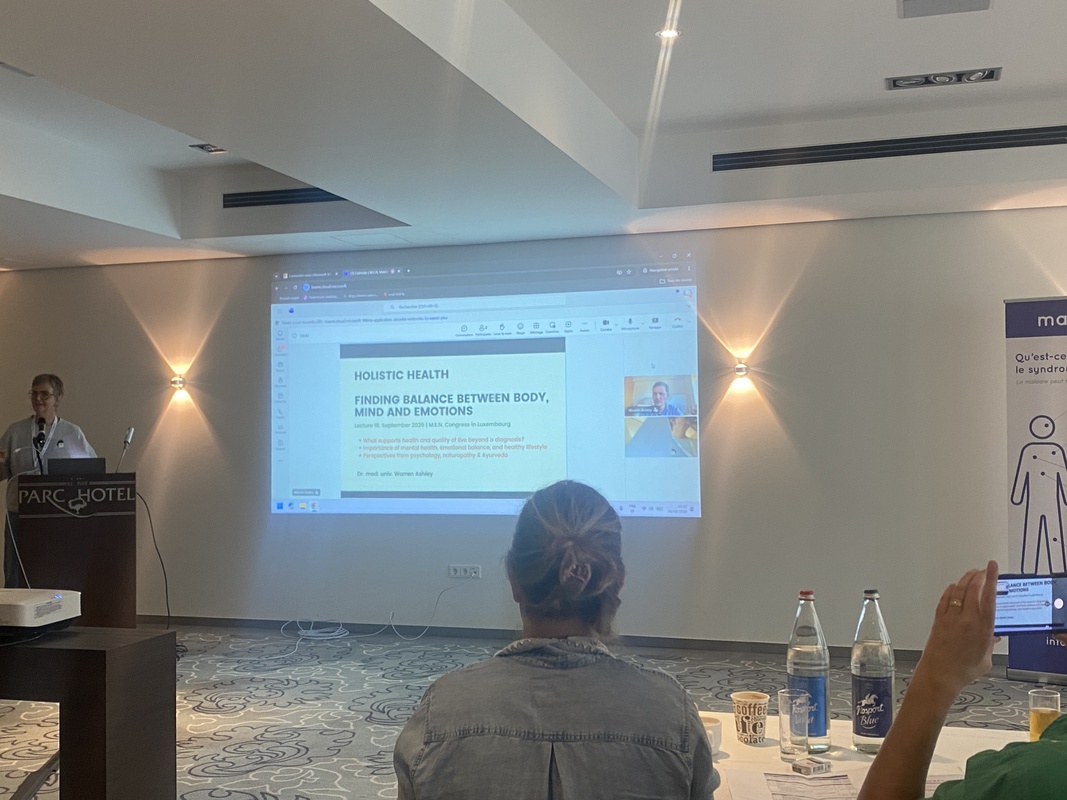
Dr Warren Ashley trained in medicine in Innsbruck and spent almost a decade as a specialist in internal medicine and cardiology in Munich. His experience led him to explore a more holistic approach to health, bringing together conventional medicine with naturopathy and Indian Ayurveda, traditionally translated as “the Science of Life” and described in the medical literature as a comprehensive approach encompassing body, mind, emotions, spirit and environment. Now a health counsellor in Luxembourg, Dr Ashley practises Ayurveda alongside his medical background.
During his presentation, Dr Ashley reflected on a medical system understandably focused on symptoms, diagnosis and treatment, where prevention can sometimes take a back seat. He described how Ayurveda had opened up a different perspective for him, centred on prevention, self-awareness and paying attention to the body’s signals. After almost a decade in hospital medicine, he stepped back to explore how conventional medicine and a more holistic approach might work alongside one another. He also considered the language we use to describe health and disease, noting that the words people associate with them often have little to do with the body itself.
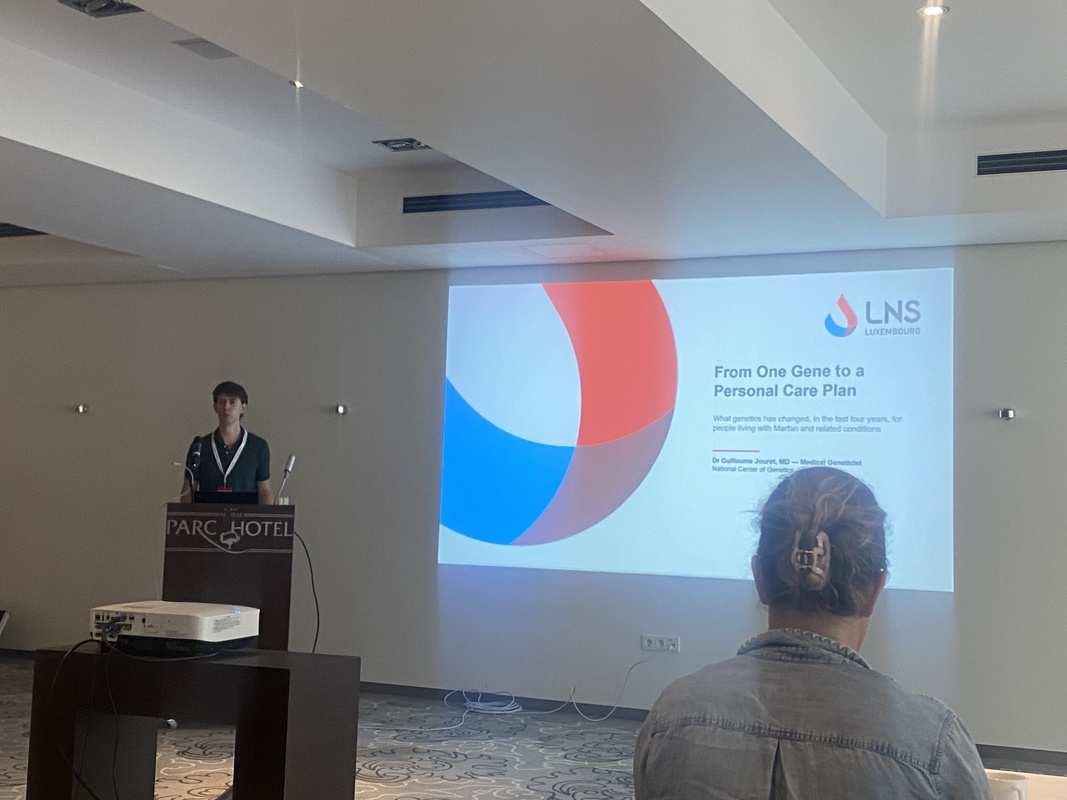
Clinical Geneticist Dr Guillaume Jouret spoke on From One Gene to a Personal Care Plan. Around half of people with Marfan syndrome remain undiagnosed worldwide, many with a milder or less recognisable presentation, underscoring the importance of diagnosis through DNA rather than through a “Marfan look”.
The FBN1 gene now has its own rulebook. In 2024, the ClinGen FBN1 Expert Panel refined the rules for interpreting variants, adapting 14 of the 28 criteria developed by the American College of Medical Genetics and Genomics (ACMG) and the Association for Molecular Pathology (AMP) specifically for FBN1. The more difficult cases, including variants of uncertain significance (VUS), should be revisited after around three years. A genetic report is not dated but dynamic: what is uncertain today may be understood tomorrow. A “negative” FBN1 result does not necessarily mean no Marfan, as variants can hide in deep intronic regions, copy-number changes or mosaicism. Dr Jouret also showed how the type and location of a variant can carry prognostic weight, with implications for the aorta, eyes, spine and pregnancy, bringing us closer to one gene becoming a personal care plan.
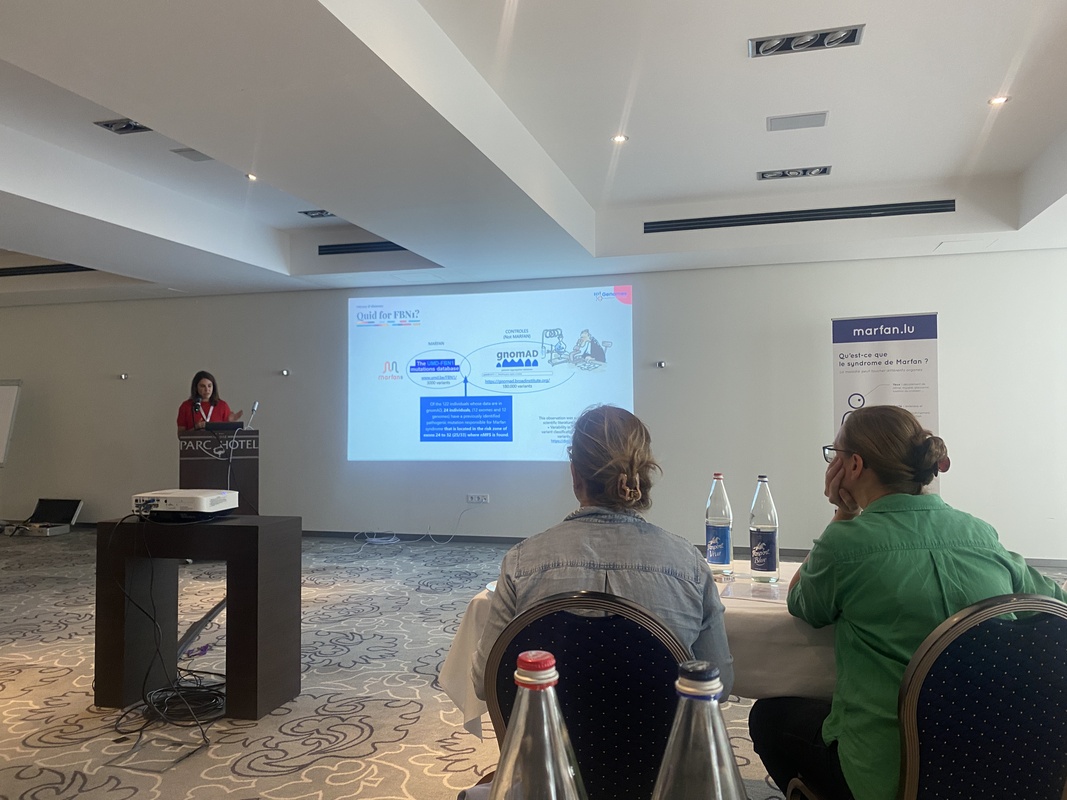
Romain Alderweireldt and Ludivine Verboogen’s 101 Genomes project concluded the day. Their research began with their son. He has neonatal Marfan syndrome and was given a bleak prognosis. Searching for answers, they came across a paper describing 13 adults who appeared to defy their genetic destinies - alive and healthy despite carrying mutations normally associated with grave illness beginning in childhood. It sparked a question: could protective modifier genes help explain why some people with Marfan syndrome are so much more mildly affected than others? Inspired, too, by the maverick spirit of PEARS pioneer Tal Golesworthy, they set out in search of these genetic protectors. Now they are preparing to announce exciting news in the Science in Spain Symposium: the discovery of a potential modifier gene