New Exercise Recommendations
for people with Marfan Syndrome

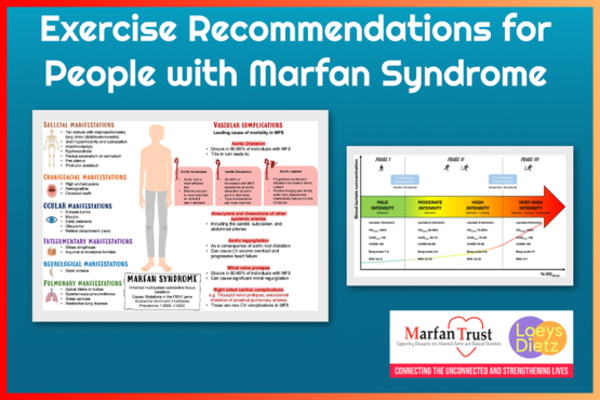
Exercise has long been considered a double-edged sword: while physical activity improves cardiovascular health, mood and functional capacity in the general population, in Marfan patients rapid rises in blood pressure, heart rate and mechanical stress on the aorta can be hazardous. Traditional guidance therefore erred on the side of restriction and caution, particularly avoiding high-intensity, competitive, isometric and contact sports. However, these recommendations have been based on limited evidence, prompting the need for updated, more nuanced guidance that balances safety with the well-known harms of inactivity.
Emerging evidence from animal models and small human studies suggests that low-to-moderate intensity aerobic exercise can be safe and potentially beneficial for carefully selected, lower-risk Marfan patients. Moderate training has been associated with improved fitness, reduced fatigue, better quality of life, improved blood pressure profiles, and in some studies, stable or even slower progression of aortic dimensions. This is provided that intensity is controlled and patients are appropriately monitored. By contrast, heavy resistance training, prolonged straining, high-intensity interval exercise and activities with collision risk remain potentially dangerous owing to acute blood-pressure surges and trauma. Although the data remains limited and largely short-term, there is no strong evidence that carefully prescribed moderate exercise escalates aortic disease in low-risk individuals.
Current guidelines therefore emphasise tailored exercise prescription based on aortic size, overall cardiovascular risk, baseline fitness and comorbid skeletal or pulmonary limitations. Most clinicians recommend regular moderate aerobic activity, typically keeping effort in a low-to-moderate intensity range (often around 50–70% of maximum heart rate), while avoiding heavy static loading, competitive sports and high-risk activities. Exercise regimes should ideally be designed with specialist/expert input, supported by imaging surveillance and, where appropriate, exercise testing. Shared decision-making is essential, recognising both the cardiovascular risks of Marfan syndrome and the substantial physical and psychological benefits of remaining safely active.