Modern medicine moves apace and is rarely out of the news. Most recently, there was a story on mutations, leukaemia, and improved survival through CAR-T therapy. How might this relate to Marfan syndrome?
You may have seen a recent and very interesting news story about mutations, leukaemia and improved survival using a treatment called CAR-T therapy. Below is a brief explanation of how this treatment works, and why it cannot be used for people with Marfan syndrome.
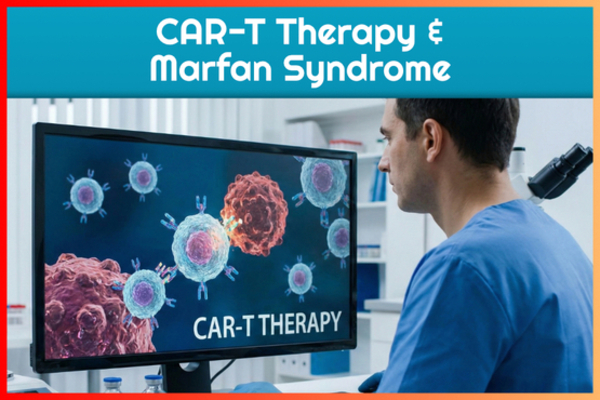
CAR-T therapy is not a form of gene therapy. It is a treatment designed to find and destroy specific cells in the body. In CAR-T therapy, doctors collect some of a patient’s own immune cells (called T cells) and modify them in the laboratory so they can recognise a particular marker on the surface of certain cells. These modified cells are then returned to the patient through the bloodstream. When the CAR-T cells encounter cells carrying that marker, they become activated and destroy them. Importantly, CAR-T therapy works by removing an entire group of cells, rather than by fixing a faulty gene or repairing damaged tissue.
This approach works well for some blood cancers, such as certain types of leukaemia, because the disease is caused by a clearly defined group of abnormal blood cells. These cancer cells often share a specific surface marker, and the body can tolerate the loss of that whole cell population. Once the abnormal cells are destroyed, healthy blood cells can regrow, which is why CAR-T therapy can lead to long-lasting remissions in some patients.
Marfan syndrome is very different. It is not caused by a harmful group of cells that can be safely removed. Instead, it is caused by a change in a gene that affects connective tissue cells throughout the body, including those in the heart, blood vessels, lungs, bones and eyes. These cells are essential for normal structure and function and cannot be destroyed without causing serious harm. In Marfan syndrome, the cells themselves are alive and doing their jobs, but the protein they produce does not work as it should.
Because CAR-T therapy works by killing cells rather than repairing them, it cannot be used to treat Marfan syndrome. Current treatments therefore focus on protecting affected tissues, reducing strain on the heart and blood vessels, and preventing complications. Here at the Sonalee Lab (Marfan Trust Lab), we are working hard to understand gene editing and related technologies, with the long-term aim of translating this knowledge into safe and effective treatments for people with Marfan syndrome. Research takes time, but the direction is promising, and we are hopeful for the future.