Vascular Ehlers-Danlos Day
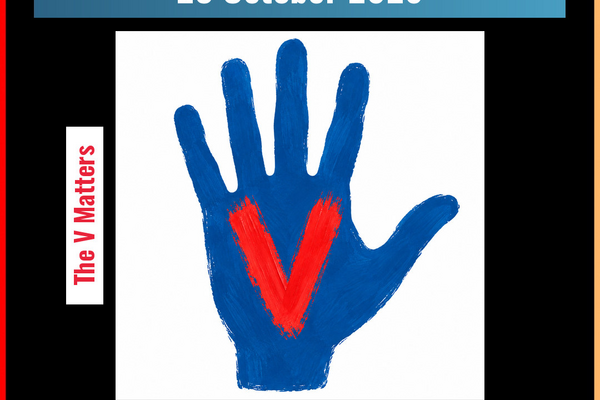
The V Matters!
(For more information, please turn to Annabelle's Challenge, the only charity in the UK devoted exclusively to suppoting people with vascular Ehlers-Danlos syndrome).
Beneath the surface, an invisible network holds us together. Connective tissue lends strength to our skin, our organs and the blood vessels that carry life throughout our bodies. In vascular Ehlers-Danlos syndrome (vEDS), a rare inherited condition caused by changes in the COL3A1 gene, the body’s supply of type III collagen, one of the essential building blocks of this network, is disrupted. The result can be fragile tissues and blood vessels vulnerable to aneurysms, dissections and rupture.
This is where the V matters. V is for vascular, the blood vessels at the heart of this condition, but it is also a reminder of the importance of visibility, voice and value. vEDS can be difficult to recognise: its signs may be subtle, and its effects can vary widely, even among members of the same family. Genetic testing is needed to confirm a diagnosis, and early recognition and specialist care can make a meaningful difference.
Vascular EDS is an autosomal dominant condition for which genetic testing is required for a definitive diagnosis. It is estimated to affect between 1/50,000 to 1/200,000 people (Byers et al. 2017). In the UK that would mean around 740 people.
Although vEDS can be life-threatening, it does not define the whole of a person's life. With informed medical care, appropriate medication and individualised lifestyle advice, people can navigate the uncertainties of the condition and look towards the future. Some live well into their seventies and beyond.
The V matters because every life matters. Behind the gene, the diagnosis and the medical statistics is a person whose story deserves to be seen, whose voice deserves to be heard, and whose future matters.