Life with a Connective Disorder
by Scott Stowell
by Scott Stowell
“Come on, Scott… shovel faster!” my mom said. It was February of 2014. I was 16 and my mom, my younger brother, and I were shovelling the driveway for one of her friends who was sick. I had told her before we left I wasn’t feeling well but I wasn’t running a fever so what was she supposed to do? So, there I was in the cold, barely able to shovel anything, having trouble breathing. This was when everything I knew about my life changed.
What happened next was a blur. Getting home, crawling into bed, going to the doctor, the look of surprise on her face after listening to my lungs. I remember her telling me it was either pneumonia or a collapsed lung. Immediately following that appointment, she referred me to the hospital for a chest X-Ray which had confirmed her suspicions. I had an 80% collapse of my right lung.
A Merry-Go-Round of Doctors
Of course, before this point I remember being dragged from doctor to doctor - geneticists, physical medicine doctors, ENTs, ophthalmologists, etc. if you can name a specialist I had probably seen one.
Since I was born it was suspected that I had some sort of connective tissue disorder. Over the years, Marfan syndrome had routinely been ruled out through genetic testing, despite me manifesting many of the same physical features and underlying symptoms.
Despite knowing I had some kind of underlying connective tissue disorder no one had warned us that a spontaneous pneumothorax, or collapsed lung, was a common occurrence in someone with a connective tissue disorder.
Fitting In
Up until this point I had led a relatively normal life. I had played various sports when I was younger, and always tried my hardest to fit in with my peers and do everything that they could do. As I sat there in my hospital room my mind began to race, always coming back to the same question: what happens now? The surgery for a collapsed lung is not fun one. It involves a blebectomy, which is the removal of tiny air pockets on the surface of your lung, and then a chest-tube being placed to allow your lung to re-expand. I was in the hospital for a total of nine days for my first collapsed lung and it was one of the most painful experiences in my life (second only to open-chest heart surgery).
Returning to school after my first collapsed lung was difficult, I was constantly tired and couldn’t focus as much on my classwork as I wanted to. Then the unthinkable happened almost a year later in March of 2015 the other side, my left lung, had collapsed. This led to another surgery, chest tube, and subsequent 10-day hospital stay. Following that, I had another three collapsed lungs for a total of five between my sophomore and senior year of high school. The final fix to stop my lungs from collapsing was a surgery known as talc pleurodesis, where they go in and place sterilized talcum powder in-between the lungs and the chest wall to adhere the lungs to the chest wall so they can no longer collapse. After that procedure I have not had a collapsed lung since February of 2016, though for a while afterwards I still lived in fear of having another one. I now follow up on an annual basis with a pulmonologist and wear a smart watch that can track my blood oxygen to help put my mind at ease.
The Unpredictability of a Connective Tissue Disorder
Living with a connective tissue disorder when you don’t know how it fully affects you and your doctors don’t know the answer either is extremely hard. You live in a constant state of anxiety wondering if you’re going to have a good normal day or another unexplained medical crisis.
Many people believe that having an official diagnosis of Marfan’s, or Loeys-Dietz, or Ehlers Danlos or any other connective tissue disorder will simply solve all their problems. I even used to think this way and that knowing what I had would be a magical solution and I would suddenly be fixed. Unfortunately, it doesn’t work this way as connective tissue disorders affect people in different ways. I have many of classic Marfan indicators despite not having a mutation on my FBN1 gene and there are also many people who do have an official diagnosis who may not present any indicators. For most of my life I’ve lived in a limbo knowing that I have some kind of connective tissue disorder but not knowing how it would affect me until after things like the collapsed lungs had already happened.
Referral to Cardology
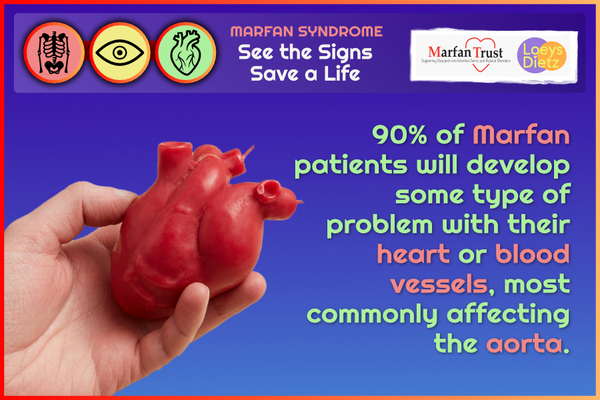
One of the biggest concerns of a connective tissue disorder is how they weaken the structure of the aortic wall and can cause life-threatening events such as aortic aneurysm or dissection. I’ll never forget the first time I had a cardiologist tell me if I ever felt a ripping or tearing in my chest to get myself to the emergency room immediately. Since then, I haven’t liked to be very far from the nearest major hospital. Luckily, because my connective tissue disorder is Marfanoid in its manifestations, we were referred to cardiology for them to evaluate my heart after my first collapsed lung.
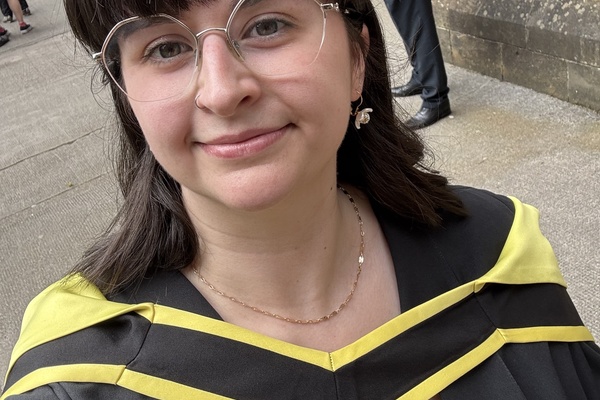
Graduating from College
What they found was heart-breaking (literally) I had a dilated aortic root that was measured at 4.1 centimeters. At the time this was considered a mild dilation, as typical aortic root dimensions for an adult male are anywhere between 2.9 – 3.7 centimeters.
I was immediately put on an ARB medication known as losartan and then later switched to atenolol, a beta blocker, due to the side effects I experienced. These medications help slow the rate of dilation and I am so thankful for them as they allowed me to delay my heart surgery as long as possible. If you have or suspect you may have a connective tissue disorder or have received a variant of unknown significance (VUS) genetic testing result please speak with your GP and get a cardiology referral to evaluate your heart, the sooner you know about something like a dilated aortic root the better your care team will be able to help guide you.
After that finding I was told I may never even need surgery and I could potentially stay at 4.1 centimeters all my life and to make sure to take my medication every single day. Thus, began close annual monitoring of my aortic root dimensions over the next decade. In the meantime, my life had returned to being relatively normal. I had graduated from high-school and gotten into a four-year university, opting to do 2 years at a community college instead to focus on my health. This ended up being a good decision as after my first year of community college my family ended up moving halfway across the country to Texas, where I still currently reside. I was able to work and travel a little bit before finally finishing my second year of community college and then transferring to a four-year university to finish my degree. Throughout my university experience I had some minor health struggles as anyone with a connective tissue disorder knows you tend to have good days and bad days. Fatigue and pain are common traits and I was no different in having those experiences, but despite this I pushed through and graduated from college in December of 2021.
Migraines
After moving back home from college I started a new job that following summer and eventually ended up getting my own apartment. My first year of work was relatively normal but I started getting migraines in the evenings after work. This eventually led to another connective tissue-related discovery. I had a 6-centimeter tarlov cyst located at the base of my sacrum. In October of 2024 I had back surgery with a neurosurgeon who specializes in removing these kinds of cysts. When you have a connective tissue disorder even planned procedures become a lot more difficult. I had to get clearances from my cardiologist and pulmonologist and had to accept the risks that something could always go awry. Luckily, I had a relatively uncomplicated procedure and woke up in a hospital room a few hours later. Recovery after that surgery was long and walking was difficult for a while. However, that was my first major procedure since my last collapsed lung and was relatively minor compared to what I was about to face next.
Gastrointestinal Abscess
In the Spring of 2026 I had just come back from seeing a friend when suddenly I had searing pain in my lower right side as the night went on it became worse and worse. I went to bed expecting it to be gone by the morning but woke up and the pain had gotten so bad I could barely make it out of bed. I went to my primary care doctor and she thought my appendix had burst. I immediately went to the ER where they did a CT scan and found two gastrointestinal abscesses and a fistula. I was admitted to the hospital and put on IV antibiotics my abscesses grew smaller over the next few days and I was discharged with a picc line in my left arm and had to do at home antibiotics for the next two weeks. Unfortunately, one of the abscesses did not respond to treatment and even after being switched to a different antibiotic I started running a high fever and had to be admitted back to the hospital once again. This time I had to undergo an ileostomy where the part of my colon containing the abscess was removed and then the healthy parts were reattached. Of course, after this experience once again the doctors were stumped they suspected an inflammatory bowel disease like Crohn’s or Ulcerative Colitis but to this day testing is still indeterminate and I still have ongoing gut related symptoms. One thing that is certain though is that GI issues are relatively common in connective tissue disorders and yet was another thing that caught us by surprise.
Aortic Surgery on the Horizon
While all of this was going on my worst fear also finally happened a CT confirmed that my aortic root had dilated to 4.6 centimeters. A CT done in 2020 while I was still in college showed it had grown from 4.1 centimeters to 4.3 centimeters and after that had happened the likelihood I’d need a surgery one day became a reality. Now I was at 4.6 centimeters and current guidelines in the US for someone with a connective tissue disorder recommend surgery between 4.5 and 5 centimeters to prevent a life-threatening aortic dissection or rupture.
Unfortunately, many lives have been lost to aortic dissection in people who did not even know they had a connective tissue disorder until it was too late. I was determined that I would not let my heart kill me and wanted to have as normal of a life after heart surgery as I possibly could. This led me to do what I refer to as “the craziest thing I have ever done” and upon evaluating the two surgical options in the US either valve-sparing or total root replacement I was not happy with either option as both sounded grim. To further complicate things the Dacron graft used in a valve-sparing operation sits directly in the bloodstream and my surgeon was concerned about the gut issues I had just had as the Dacron graft could get infected if I had future gut related issues. When I brought up the PEARS procedure to my US cardiothoracic surgeon he was intrigued by that option and knew the PEARS team at London Bridge Hospital and referred me over there for further evaluation.
Journey to London for Surgery
After doing a Zoom consultation with the PEARS team in London and having them evaluate my CT imaging they determined that I was an excellent candidate for the PEARS procedure and that because the ExoVasc PEARS graft sits outside of the bloodstream and eventually becomes incorporated as part of my native aorta versus the Dacron tube in a valve-sparing root replacement procedure there would be virtually no risk of infection even if I were to have future gut related issues. My surgeon here in the US after speaking with the PEARS agreed that it would be the safest appropriate intervention in my case and we got to work on getting me to London for my procedure.
It is unfortunate that PEARS is currently unavailable here in the states as an option and I hope that changes soon so no one ever has to do what I did and travel over 5,000 miles away from home in order to have life-saving heart surgery. For anyone who is interested in hearing more about that experience and how it went you can watch my interview I did with the Marfan Trust here.
Taking Stock
Living with a connective tissue disorder has not been easy and in 2024 genetic testing finally confirmed what my doctors had suspected for years, I had some kind of connective tissue disorder similar to Marfan Syndrome. The testing had revealed a variant of unknown significance on my ABL1 gene. The ABL1 gene is associated with autosomal dominant congenital heart defects and skeletal malformations syndrome (CHDSKM), finally after all of the years I had a potential diagnosis. After having communicated with one of the leading researchers on that particular disorder he concluded that this likely was my diagnosis, though this particular disorder is still relatively new and further research is still needed. I consider myself lucky finally having a potential name to go with what my doctors have suspected all my life.
However, that doesn’t change the fact that I still don’t know how I will be impacted and what (if any) future health-related issues I will face. One thing is for sure I am grateful to still be here and am fortunate to have received quality medical care (in two different countries now!) to ensure that I get to continue to live my life as best I can. I know a lot of people with connective tissue disorders wonder things like “why me” and “can’t I just be normal?”. These are questions I’ve also struggled with all my life, but at the end of the day, I wouldn’t be who I am and as strong as I am without these experiences. I have been trying to get better about sharing my past experiences and no longer try to pretend to be normal or mask my pain as that only harms myself.
I hope that by sharing my experiences I can help someone who is going through something similar and I encourage anyone with a connective tissue disorder to share theirs as well. Awareness is a powerful tool and everyone has a voice that deserves to be heard.