Systemic Score
Diagnosing Marfan Syndrome


Revealing itself beyond the heart and aorta through a constellation of physical characteristics across the body, Marfan syndrome can also be recognised through its systemic features. These are brought together in the systemic score, part of the revised Ghent criteria (2010) for diagnosing the condition. The score assigns points to characteristic physical features outside the cardiovascular and ocular systems. A total score of 7 or more is considered evidence of systemic involvement, but on its own does not signify a diagnosis of a connective tissue disorder. Examination and review by a specialist doctor are necessary.
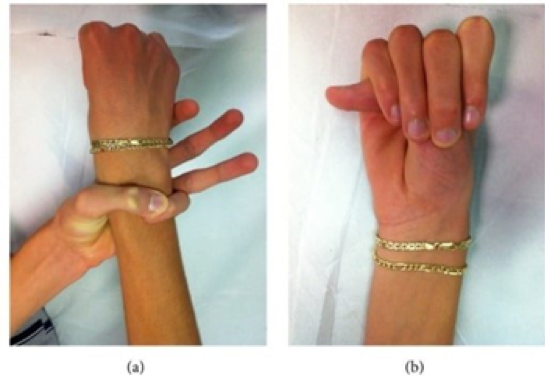
Wrist and Thumb sign (3 points for both signs, 1 point for either)
Easiest described with a photo! This sign is easy to test and can be done by anyone. Do the thumb and little finger overlap when wrapped round the wrist? Does the first joint of the thumb protrude when the thumb is wrapped in the hand?
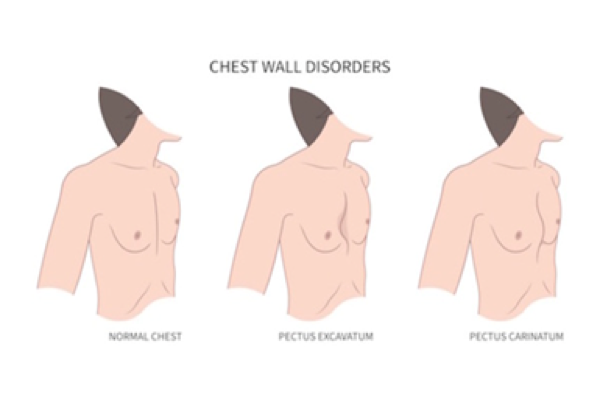
Pectus Carinatum (2 points) Pectus Excavatum or chest asymmetry (1 point)
These signs can be seen in the general population too but if they are present your doctor should be considering other signs of Marfan syndrome to rule out the connective tissue disorder or refer for more tests.
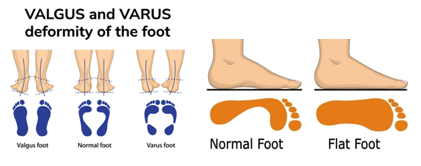
Hindfoot deformity (2 points) Plain Pes Planus (1 point)
Hindfoot issues, particularly ‘hindfoot valgus’, an outward tilt of the hindfoot (the back of the foot). These problems with the heel and ankle can lead to instability, altered weight distribution and discomfort when walking.
Planus (flat foot) scores fewer points because this is commonly found in the general population so it is less specific. In the case the arch of the foot collapses and the foot flattens and tilts inwards.
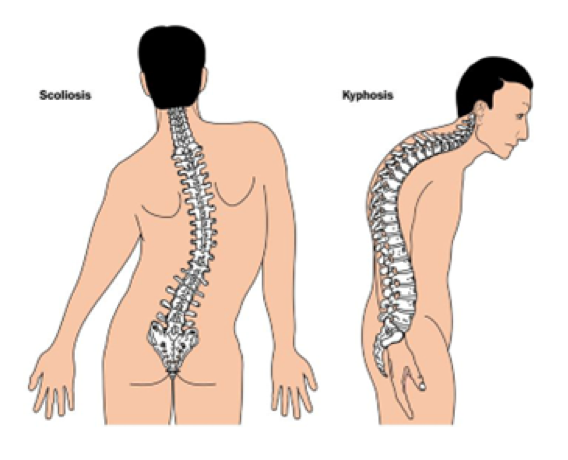
Scoliosis or kyphosis (1 point)
These terms refer to curvature of the spine and are another feature that doctors will look for when considering a diagnosis of Marfan syndrome.
Kyphosis is a curvature that makes the spine more rounded and can make a person appear hunched over.
Scoliosis describes a twisting or curvature of the spine to the side.

Reduced Elbow Extension (1 point)
A less specific sign for Marfan syndrome is reduced elbow extension. The arm cannot be outstretched in a flat position, a bend will remain.

Skin Striae (Stretch marks) (1 point)
Stretch marks on the skin are seen as significant and score a point within the systemic score if they are found in uncommon locations and not associated with weight loss/gain or pregnancy. These locations would include mid or lower back, upper arms.
Facial Features (1 point if 3/5 features present)
There are lots of complex medical terms that describe some of the facial features that may be present in Marfan syndrome.
Severe Myopia (1 Point)
Myopia is common in Marfan syndrome, often appearing early and, in some cases, becoming severe and progressing rapidly. As a result, myopia greater than 3 dioptres is included in the systemic score, although it is weighted at just one point because myopia is also common in the general population.
Dural Ectasia (2 Points)
Dural ectasia (DE) is defined as enlargement of the neural canal anywhere along the spinal column. The dura (envelope) surrounding the spinal cord enlarges, especially in the lower lumbosacral region where cerebrospinal fluid pressure is greatest.
Mitral Valve Prolapse (1 point)
Weakened connective tissue found in Marfan syndrome can affect the mitral valve and this causes the two leaflets of the valve to billow or parachute upwards into the upper chamber (left atrium) instead of staying at the same level whilst the heart beats. This is one of the things your cardiologist will be keeping an eye on during your routine echocardiogram.
If a diagnosis of Marfan syndrome is being considered this will be something your doctors are checking for.
References: Loeys BL, et al (2010) The revised Ghent nosology for the Marfan syndrome. J Med Genet. Jul;47(7):476-85. doi: 10.1136/jmg.2009.072785. PMID: 20591885.