A Patient's Perspective on Navigating Benefits
by Sydney Heighington
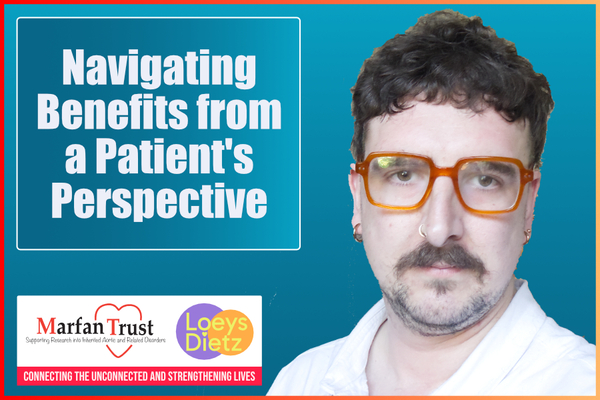
One of the hardest things I have had to come to terms with in my lifetime with Marfan syndrome is that my medical condition is, in fact, a disability. I have always been determined to live a normal life; however, now that I am almost 40 and no longer have the energy of youth, I have finally accepted that my condition is a disability because of the way it affects my daily life.
A condition is considered a disability if it has a substantial (more than minor) impact on daily activities and is long-term (lasting 12 months or more, or lifelong). Marfan syndrome clearly meets these criteria. It is a genetic, lifelong condition that can affect the heart, eyes, joints, and skeleton. This means that many people with Marfan syndrome will meet the legal definition of disability, particularly if they experience fatigue, mobility issues, or visual impairment.
When I was younger, I found it very difficult to come to terms with my condition. I often broke bones, experienced fainting episodes, and felt extremely self-conscious about my appearance. Even so, I tried hard to fit in and live a normal life.

Daily Challenges
One of the biggest challenges I faced throughout school and university was attendance. There were countless occasions when I had to take time off due to genuine Marfan-related injuries or hospital appointments. Unfortunately, this has continued into my career. Marfan syndrome has made it incredibly difficult to maintain consistent attendance at work because of the range of issues it causes.
For example, I experience skeletal problems such as swelling in my feet, which can leave me unable to walk, as well as dislocated ribs that render me immobile and in severe pain for at least a fortnight. I have also sustained injuries at work—for instance, while trying to play football with pupils (I am a teacher), hitting my head, or attempting to carry heavy items. Even routine aspects of the job, such as repeatedly climbing stairs, can be physically demanding and increase the risk of injury.
The commute presents additional challenges. I have slipped on a wet DLR carriage, fallen down steps while running for a bus, and often arrive home so physically exhausted that I am unable to do anything other than rest. It is also mentally challenging to navigate daily life with partial sight; with reduced vision, I am at greater risk of injury—for example, from not seeing hazards when crossing the road or from walking into obstacles.
I was missing support. Workplaces can be helpful if you're honest about your condition, but there is only so much they can do. For example, change your office chair or change a light fitting so you don’t bang your head. This is all good and well, but it doesn’t take away the physical and mental stress of a commute, or help you pay for treatments and aids like crutches or orthopaedics. Not to mention having to pay for all my medication, physio and travel. I earn ok as a teacher, but always felt like money was being drained on managing my condition.
Navigating the Benefits System
Around a year ago, I spoke with the wonderful people at the Marfan Trust who encouraged me to apply for disability benefits. The Trust’s website guide was really useful, and it seemed like I was entitled to support due to my Marfans.
The next step was the hardest part: coming to terms with the idea of disability. I resisted the label because I had always wanted to be seen as normal and to view myself as capable. The truth is, I am capable. I am as much a part of society as anyone else. I simply need support with certain aspects of daily life.
Reading through the materials and receiving support and advice from the Trust helped me to apply for both PIP (Personal Independence Payment) and Access to Work (a grant to help cover travel costs, such as taxis to and from work). I will be honest—it was quite an arduous process, involving gathering medical evidence, finding the right information, and completing the forms accurately.
From Rejection to Success
Initially, my PIP application was declined, and I almost gave up. In hindsight, I had described more of a “good day” scenario and had not been fully honest about the extent of my difficulties. When I applied a second time, with guidance from the Marfan Trust, I presented a more accurate “worst day” picture. While it felt positive to be honest about how much I genuinely struggle, it also made me feel quite sad—sad that I found so much so difficult.
However, coming to terms with this allowed me to become more open to the idea of disability and to receiving appropriate support. My second application was successful, and I was awarded a monthly payment to help cover the cost of medication, support aids, treatments, and therapy. This has made a significant difference to my life and how I cope. I feel much more at ease knowing I can afford the things I need to manage my condition.
At the same time as applying for PIP, I had also been referred for Access to Work. A few months after receiving my letter from the DWP regarding PIP, I was invited to attend an appointment. I found it much easier to explain my difficulties in conversation. Within a week, I was awarded a grant to cover my travel to and from work.
Accepting Help
When I say this has changed my life, I truly mean it. I no longer arrive at work or home completely exhausted and in significant pain. I arrive feeling more rested and have the energy to engage in life beyond the working day. I am no longer tired and irritable at school—the children now have a much happier, more present teacher.
Now that I am embracing the reality of my condition—that I do not have to face it alone and that I can reach out for support—I feel much more like my true self. I feel more honest, both with myself and with others. Despite the challenges I sometimes face in simply getting through a normal day, I remain positive.
It is okay to say that I need help. It is okay to acknowledge that I have a disability, and it is okay to reach out and accept support where it is available. I am hugely grateful to the Marfan Trust for their guidance and communication throughout the application process. Now that I understand it better, I am also happy to support others who may be going through something similar and wish to reach out.
Accepting help does not define you, nor is it a sign of weakness. In fact, it is a sign of real strength—being honest about your struggles and taking steps to support yourself. You are not only entitled to help; you deserve it.